Blog

Early Signs of Cerebral Palsy in Babies: A Clear Parent Guide
If you are worried about your baby’s development, you are not alone. Many parents search for early signs of cerebral palsy in babies because they notice something feels different.
In simple terms, here’s what you need to know.
In simple terms, here’s what you need to know.
What is Cerebral Palsy?
Cerebral palsy (CP) is a condition that affects movement, muscle tone, and posture. It occurs when a child’s brain is injured or develops abnormally during pregnancy, birth, or early childhood.
Important points:
Important points:
- CP is not spread from person to person.
- Brain injury does not worsen over time.
- But as your child grows, symptoms become more pronounced.
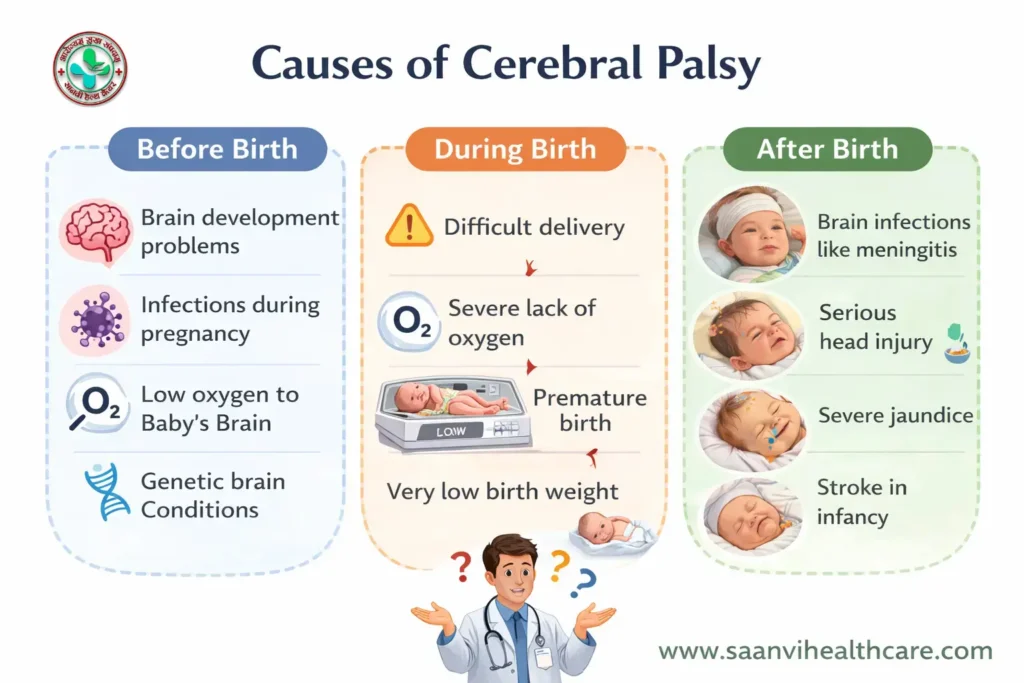
Causes of Cerebral Palsy
CP can occur before birth, during delivery, or after birth.
Before Birth (Most Common)
Before Birth (Most Common)
- Brain development problems
- Infections during pregnancy
- Low oxygen to the baby’s brain
- Genetic brain condition
- Difficult delivery
- Severe lack of oxygen
- Premature birth
- Very low birth weight
- Brain infections like meningitis
- Serious head injury
- Severe jaundice
- Stroke in infancy
Why Early Detection of Cerebral Palsy Is Important
A baby’s brain grows very fast in the first few years. This is when therapy works best.
Benefits of early intervention:
Benefits of early intervention:
- Better muscle control
- Improved movement and posture
- Lower risk of joint stiffness
- Better speech and learning skills
- More independence later in life
Early Signs of Cerebral Palsy in Babies
Some signs appear in infancy. Others become clear as milestones are missed.
Watch for these red flags:
Watch for these red flags:
- Poor head control
- The body feels very stiff or very floppy.
- Baby arches back while being held.
- Feeding or sucking problems
- Persistent clenched fists
- Stiff legs that cross like scissors
- Not rolling, sitting, or crawling on time.
- Early hand preference before 12 months
- Walking only on toes
- Delayed walking
- Missed developmental milestones
How Is Cerebral Palsy Diagnosed?
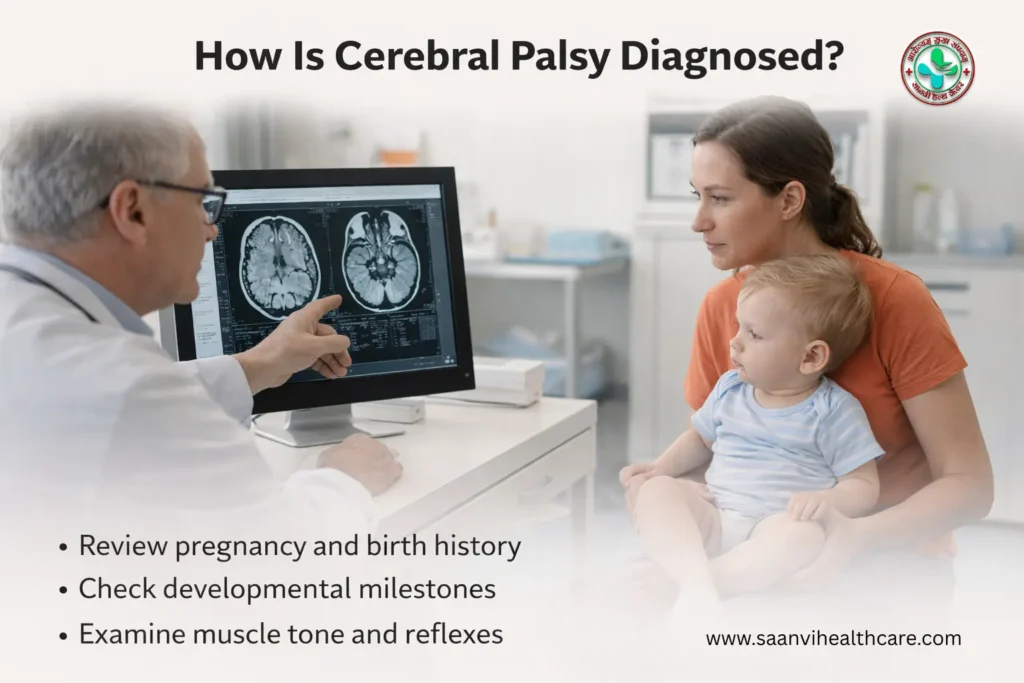
There is no single test for cerebral palsy.
Doctors usually:
Early evaluation is key.
- Review pregnancy and birth history
- Check developmental milestones
- Examine muscle tone and reflexes.
- Order an MRI brain scan if needed.
Early evaluation is key.
Treatment for Cerebral Palsy
There is no cure for CP. But early treatment improves function and independence.
Physiotherapy improves strength, balance, and movement Occupational therapy helps with daily activities like feeding, dressing, and playing. Speech therapy helps with communication and swallowing. Assistive Devices Braces, walkers, or special seating may help. Parents play a big role. Daily home practice makes a big difference.
Physiotherapy improves strength, balance, and movement Occupational therapy helps with daily activities like feeding, dressing, and playing. Speech therapy helps with communication and swallowing. Assistive Devices Braces, walkers, or special seating may help. Parents play a big role. Daily home practice makes a big difference.
Can Children With Cerebral Palsy Live Normal Lives?
Yes. Many children with cerebral palsy go to school, play sports, and live meaningful lives.
The outcome depends on:
The outcome depends on:
- Severity of symptoms
- Early diagnosis
- Regular therapy
- Family support
FAQ
At what age is cerebral palsy diagnosed?
Often between 1 and 2 years. Some signs appear earlier.
Is delayed walking always cerebral palsy?
No. Many children walk late for other reasons. But evaluation is important if other signs are present
What is the earliest symptom of cerebral palsy?
Poor muscle tone, feeding problems, or delayed motor milestones.
Final Advice for Parents
If you notice early signs of cerebral palsy in your child, don’t ignore them. Trust your instincts.
Early therapy can improve movement, learning, and independence.
When it comes to cerebral palsy, early information leads to early help. Don’t wait. Early assessment can make a big difference.
👉 Book a Development Assessment
saanviHealthcare
0